My notion of the world has been expanded by time spent in Los Angeles, Delaware, Australia, Bolivia, and New York. I look to add this perspective to every single client's piece I encounter.
I applied to be the charity: water multimedia production intern for two reasons. One, I’m very passionate about doing whatever I can to solve the water crisis because of my experience drilling water wells in Bolivia with the US Peace Corps. Two, I’ve studied digital media and filmmaking extensively and I wanted the opportunity to be able to use my skills in a professional setting that would be both challenging and instructional. The charity: water staff ethos towards working with interns was exactly the experience I was looking for. I instantly felt like I was a part of the team and was given responsibilities that challenged me.
The first video I made while at charity: water highlighted a particularly noteworthy campaign that took a very creative approach to bringing awareness to the water crisis.
My first few days were spent working on an ambitious project to personally thank 250 past and current donors. It was an all-hands-on-deck effort. Each staff member was assigned a partner and together they were assigned 8-10 videos to make. The results were amazing and continue to fuel viral views on the web and spark conversation about an organization that is willing to take on this sort of herculean task just to say thanks.
The second video I put together followed my friend — and charity: water graphic designer — Greg as he attempted to complete his own fundraising campaign by embarking on a quest to eat 101 sandwiches.
After the Thank You Campaign was “in the can” so to speak, my main task shifted to fueling charity: water’s blog with posts about notable mycharitywater campaigns. It was a true joy to be able to communicate with the folks that were out there raising awareness for the water crisis. From learning about the trials and tribulations of Whitney Henderson’s run across the US to getting insight into a couple’s love for photography to meeting a boy with the compassion of ten thousand men, I was given hope that if we all do our small part, we can change the world for the better.
I also had the distinct honor of photographing the Fall 2011 Intern class, a group that I got to know well over the course of the semester. It was a blast asking them a bunch of questions — ranging from serious to absurd — and then curating their answers into one massive post. Not only were they an incredibly photogenic group, but they were all very kind and I’m proud to call them my friends. I’ll always reflect fondly on our days across from each other at the “Intern Table.” I wish them all great success in whatever path they take.
The culmination of my experience was the privilege of shooting the charity: ball, an event that raised more than $2.5 million in a single night for clean water initiatives around the world.
Witnessing the collaboration and dedication from all of the employees and the willingness from volunteers and interns to go the extra mile made it apparent that charity: water is here to stay. Scott Harrison, the CEO and founder of charity: water, had an immediate and mathematically resolute response when I asked him if the water crisis could be solved. “Yes,” he said. “It’s a matter of money and will.” It’s incredibly motivating to work along side a man so dedicated that he can see past the malaise of challenges certain to challenge him over the coming decades and straight to the end-game.
Finally, I’d be remiss if I didn’t mention Mo Scarpelli, my mentor during the internship. She taught me a great deal about div tags and f-stops. We had great conversations about media ethics and editing strategy. Mo, you are a true joy to work for and with. Cheers!
Check out Scott’s story about why he does what he does in an interview with Tech Crunch here>
An effective television advertising campaign aims to encourage a potential customer to become an actual customer. Advertising agencies enlist many different types of strategies to become catalysts in this effort. Because television advertising is confined to very short timeframes — usually one minute or less — these agencies are wise to be mindful of using symbols to quickly convey messages in order to facilitate faster delivery of their intended message.
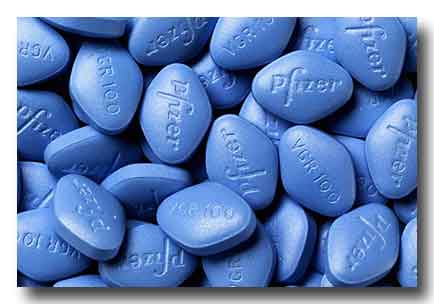
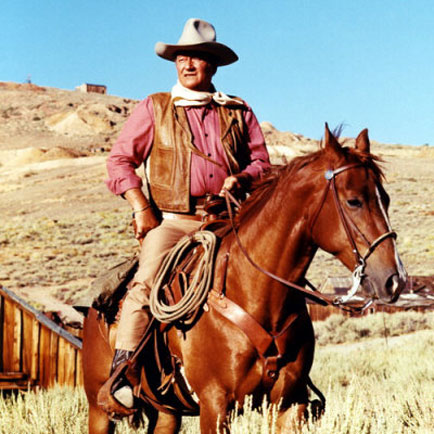
Viagra’s recent ad campaign airing on network and cable television as well as the Internet features rugged men that confidently avoid difficult situations with ease. These men fit an archetypal denotation of the American cowboy as popularized by John Wayne. Using this coding structure as a basis for study, I’ll examine two of the ads from the campaign in detail. One advertisement found relative success, while the other seems to have all but disappeared. This is most likely due to a failure to accurately encode the intended message, thereby sabotaging the entire effort.
“Every visual sign in advertising connotes a quality, situation, value or inference, which is present as an implication or implied meaning, depending on the connotational positioning.” (Stuart Hall, “Encoding/Decoding” Media and Cultural Studies: Keyworks, pg 168)
The implied meanings and qualities of the John Wayne-like actors of the Viagra ad campaign can be summarized as toughness, confidence, and grit. The ads feature men close in age to the characters that John Wayne played in movies and associate themselves with outdoor ruggedness. Furthermore, the campaign employs correlating symbols that embody sturdiness and reliability such as well-worn pickup trucks, horses, sports cars, mountains and cowboy boots and hats.
Why have these images been chosen above all others to sell a chemically engineered supplement that requires a doctor’s prescription and whose sole purpose is treating impotence? Putting aside the ethical dilemma of inserting a paid advertisement between doctor and patient, the link becomes clear. Because the penis is inherently the most symbolic aspect of the male experience, any decline in its natural, biological functionality would lead to an impairment of feeling “manly.” Because our society places a great deal of importance on behaving in a way that adheres to mainstream gender roles, this impairment could have devastating effects on men, which could lead to any number of psychological ailments in addition to their physical condition.
A burgeoning population of the “baby boomer” generation and a statistical rise in divorce rates in the United States equates to men — and women — leading sexually active lifestyles later into life than before, which places a greater value of being able to perform in the bedroom even though the body may not be physically capable. Because American society has a sense of entitlement even in the face of natural decline, products like Viagra have become wildly successful.
Since the topic is still somewhat taboo, advertising agencies must be selective and resourceful when using imagery to convey feelings and beliefs about impotence. And because they have very little time to convey these feelings and beliefs, they must use symbols, codes and myths that are easily recognizable and “downloadable” to their target audience.
Thus it makes sense that the agencies have chosen the cowboy archetype as inspired by John Wayne because this is an image that is so deeply embedded in the minds of men that grew up watching him on television and in theaters. John Wayne himself has become inextricably linked to the characters he played in movies.
“Certain codes may, of course, be so widely distributed in a specific language community or culture, and be learned at so early an age, that they appear not to be constructed — the effect of an articulation between sign and referent — but to be ‘naturally’ given.” (Stuart Hall, “Encoding/Decoding” Media and Cultural Studies: Keyworks, pg 167)
So it is only natural that in order to portray manliness, the agency sought out an actor that would instantly resonate with audiences as such. After the symbols are presented in the early moments of the ads, the audience has already decoded the meaning, which allows the brand to associate themselves with the visual representation of the feeling of manliness. The actor, while “only possessing some of the properties of the thing represented” (Charles Pierce, Speculative Grammar) is sufficient to trigger this response. It promotes the idea of individualism and that problems can be solved most efficiently when only one person is there to make the decisions.
“Myth deprives the object of which it speaks of all History. In it, history evaporates. It is a kind of ideal servant: it prepares all things, brings them, lays them out, the master arrives, it silently disappears: all that is left for one to do is enjoy this beautiful object without wondering where it comes from.” (Roland Barthes, “(i)Operation Margarine;(ii)Myth Today” 2nd principal figure, Media and Cultural Studies: Keyworks, pg. 101)
From this imagery a few questions arise: Does the cowboy have a Viagra prescription? If so, is the viewer in the target audience to believe that if it’s okay for the cowboy to take Viagra, then it’s okay for him to take it? Or is it saying, look at this idealized version of manhood. Are you matching up? Are you a problem-solver? Do you take challenges head on? Are you able to actualize the most primal urge of humanity?
The television medium can be associated with narrative works, but also has been increasingly associated with “reality-based” shows that feature real people. Clearly, the ad company has agreed with Viagra that they are best served by featuring a “real man.” Again the representation is far from real, the scene is constructed and shot with cameras also found on Hollywood movie sets and it uses an actor that fits a profiled definition of attractiveness and grittiness.
Multiple advertisements for Viagra were produced as a series with the same cinematic language, color tint, and semantic ideology.
The next ad in the series follows the exact same pattern, but the John Wayne archetype is thrust into the world of solo-sailing. This time, Viagra stumbled in their attempt at authenticity and ruined their chance to connote an effective coding so as to transmit any tangential association that would trigger purchase. Sailing forums lit up with myriad critical assessments of the ad. The error was so offensive that sailing enthusiasts flocked to the blogosphere and Viagra wisely removed it from the airwaves before more negative press assailed it. (No pun intended.) Would they have pulled the ad if they thought these sailors were not part of their target demographic? It’s an interesting debate.
The point is that the men in these commercials are actors. They are playing a part that is intended to perpetuate myths about the capabilities of wise, older men like that of John Wayne’s fictional, tough-guy characters. It is the advertising agency’s job to ensure there are no holes in the play that would deflate the myth and thus leave the viewer/consumer on a cold, empty plateau of their mind without any symbology to decode and identify with.
If the series of TV ads are to be taken as a story or object that is part of the fabric of reality as the pharmaceutical giant intends, then the final paragraph of Barthes’ writing sums it up best:
“The fact that we cannot manage to achieve more than an unstable grasp of reality doubtless gives the measure of our present alienation: we constantly drift between the object and its demystification, powerless to render its wholeness. For if we penetrate the object, we liberate it but we destroy it; and if we acknowledge its full weight, we respect it, but we restore it to a state which is still mystified. It would seem that we are condemned for some time yet always to speak excessively about reality. This is probably because ideologist and its opposite are types of behavior which are still magical, terrorized, blinded and fascinated by the split in the social world. And yet, this is what we must seek: a reconciliation between reality and men, between description and explanation, between object and knowledge.”(Roland Barthes, “(i)Operation Margarine;(ii)Myth Today” Media and Cultural Studies: Keyworks, pg. 106)
So what do you think? How do these archetypes affect your self image?
The table was set. The N’Harmonics knew their cue. They would all be dispersed around the entrance to the bar and when I went up to Alexis and wondered aloud if anyone would be willing to help me sing “Happy Birthday” to her, they would… well, just watch and I think you’ll understand.
Leading up to Alexis’ 30th birthday I was very perplexed about what to get her. Gradually a plan began to evolve in my head. I wanted to take her to the Book of Mormon, but once I looked at ticket prices, I knew that was out of my range. Or was it?
Since I was successful using a Fundrazr campaign to solicit gifts — funds to help me get to my friend’s wedding in Wyoming — for my birthday earlier in the year, I thought the same formula could be used again. It had a somewhat oblique application to mine, but I thought it would still be respected. I would ask Alexis’ friends from near and far to donate to her birthday to help buy her ticket to the show and I would pay for my own.
In order to do this, I would need to take over her Facebook page so that I could appeal directly to her friendship network. After consulting with the tech support folks at Fundrazr and really delving into Facebook’s privacy settings, I knew that was my only option. Fortunately she relented pretty easily. Once the page was active, donations began to steadily stream in. I know Alexis has a lot of really good friends, many of whom I count among my own friends, but it was impressive to see the generosity up close and personal.
Now that the tickets were in the works, I started to think about how to say thanks to the people that helped to fund the birthday present and also how to deliver the tickets to her. I knew that she really like a cappella singing and that’s when the idea popped into my mind to try and find a singing group to serenade her using a flashmob style. Then I would present the tickets. And finally, to close the loop, I would film the whole thing and personalize the piece by adding a note of thanks from the both of us at the beginning of each video.
I took to searching the internet for a local a cappella group and came upon a group of singers from NYU called N’Harmonics. I reached out to them and was happy to hear back from Francesca. She helped me coordinate the effort, culminating in a meet up around the corner from the Swift Hibernian Lounge where I had stationed Alexis with a good friend and co-conspirator, Danielle.
I have to say thanks and give props to charity: water and Mo Scarpelli for the idea. If I wouldn’t have had the opportunity to work on the charity: water thanks videos at the beginning of my internship, I don’t know if it would have occurred to me.
I had to go down and see what all the hubbub was about so I walked out of class and joined the #OccupyWallStreet protestors. Here’s what I saw.
The march was very peaceful. Strangers were commenting to each other about what a great feeling they were experiencing. The energy was palpable. It reminded me of running a marathon. People were on the sidewalks cheering us on. They had wry smiles that definitely urged us to keep at it. It was pretty powerful — electric. Folks were coming out on to their balconies and watching. Workers were standing in their storefronts cheering us on. Construction workers and cabbies high-fived us as we flooded around their cars.
Overall things seem to be organized, calm, and collected. During our pre-march brief we were instructed to respect the cops and remember that they are there to protect us. The protestors’ beef is not with the NYPD.
It was interesting to see the Labor Unions join forces. It’s a little late in the game — already into the third week — but, I didn’t get the sense they were trying to co-opt the movement. While there were obviously some that were leading the charge, there was no one person guiding us.
Finally, I found the crowd to be what you’d expect in New York. Courteous, respectful, and diverse. And when I say diverse, I mean age, sexuality, race — there was a little bit of everything represented. I think the MSM is getting it wrong when they say it’s all “crybaby kids that don’t have anything else to do.” Everyone there was passionate about what they were doing and well aware of the risks.
Collaborating with old friends on new projects is always something that A Table For One Productions takes a great deal of pride in. Reid Kirchhoff will be rolling out his newest one-man comedy show at Duplex on August 5th and 6th should not to be missed.
In order to help drum up support and offer a glimpse into the preparations behind such an epic performance, Reid asked me to follow him around for a day. What ensued was nothing short of the Beatles first setting foot on American soil or man landing on the moon. You’ll have to watch to understand.
Tickets for Reid’s upcoming shows can be purchased by visiting reidthis.com
This video comes as bonus footage to the photography shot at the Christofferson/Koelzer wedding. Nothing is quite as delightful as capturing two people in love and the warm friendships that surround them. Especially when those two people are close friends. Congratulations, Lance and Jenny!
That’s roughly the GPS location of where this well currently resides in the middle of the Bolivian Altiplano. If you plug it into Google Earth it will take you directly to the place where I spent more than a year of my life living and working with my sitemate, Tiffany and my Bolivian friends and counterparts.
It’s hard to believe that I left the country three years ago. The experience and lessons learned left such an impact that the memories are still clear and vivid.
I’ve tried to honor the people I met and the work I did by continuing to work for causes that I believe in here in the U.S. Those causes- non-profit institutions that support international exchange, climate change education programs like 350.org, self-exploration and artful expression through documentary– have helped sustain my artistic endeavors.
I hope that one day soon I can return to Bolivia to check in on my wells and the Arias Family, my hosts for my tenure in the great city of Santiago de Huari and of course my invaluable counterpart Jose Luis Castro (pictured here kneeling with me on the right next to a newly minted well).
The Young Leaders Dialogue with America is sponsored by the Bureau of European and Eurasian Affairs at the U.S. Department of State. It is administered by the Institute of International Education (IIE), and provides strategic opportunities between emerging leaders from Central Europe and the Baltic States and their U.S. counterparts on issues of mutual concern.
The program connects young leaders from Austria, Bulgaria, Czech Republic, Estonia, Germany, Hungary, Latvia, Lithuania, Poland, Romania, Slovakia, and Slovenia, with young leaders from across the United States to exchange ideas and information as it relates to three “dialogue” themes: New Challenges in Transatlantic Security, Climate Change and Environmental Issues, and Tolerance and Diversity.
Working closely with IIE staff and Program Officers at YLDA, a graphic solution was achieved and implemented as a way to quickly communicate the goals and ideals of the Academy. Different versions of the new logo are used throughout YLDA’s website, in print publications, and during conferences.
The Institute of International Education is a large non-profit organization that administers over 200 programs serving more than 20,000 individuals each year. IIE provides a wide range of services to and manages or administers programs for many corporations, foundations, government partners, and international agencies.
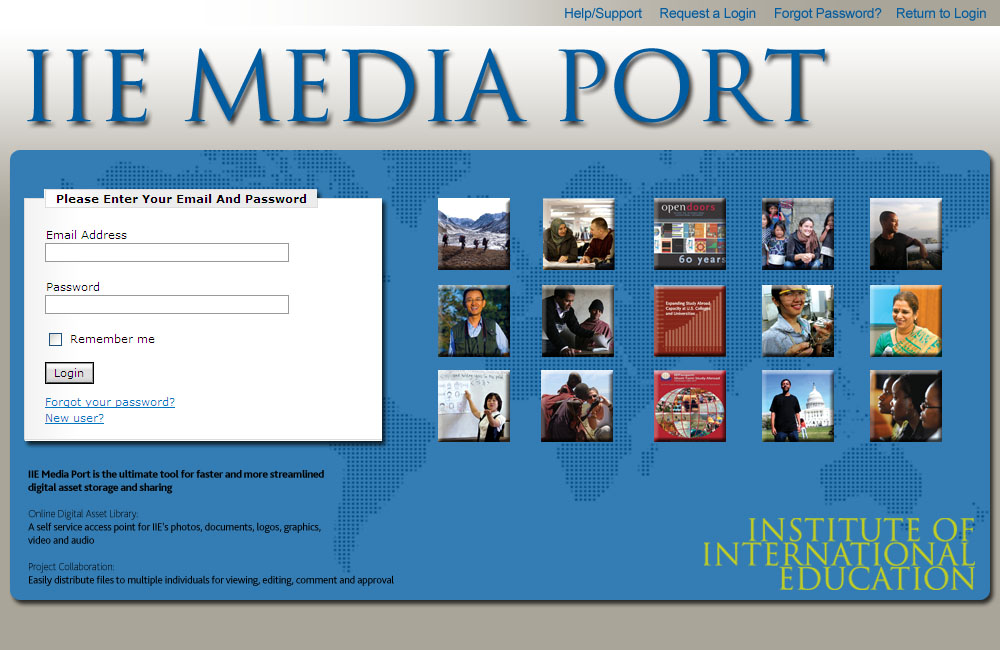
In order to provide a safe, user friendly environment to upload and share photos, documents, and videos I was contracted to help implement a new system from the ground up. Working closely with our hosting partner, Widen, IIE Staff and I created IIE Media Port to reflect the Institute’s branding and mission.
In less than a year since its inception, IIE Media Port now holds more than three thousand digital assets with over 700 users worldwide.
Check out video featuring a rooftop painting by Molly Dilworth made on the roof of ACORN High School at 561 Grand Avenue, Brooklyn, NY in November 2010.
This piece was one of 24 global large-scale artworks organized by 350.org calling for climate change action before the December 2012 United Nation climate talks in Cancun, Mexico. This project uses infrared-reflective roof coating to help ameliorate the heat-island effect and to mark a physical presence in digital space.
The image represents the NYC harbor after a 7-meter rise in sea levels. The blue is the water as it is today, the brown is the land that would be left after such a rise and the white is the new water line.






 A Table for 1 Productions